Facebook as a Unified Messaging Platform
Facebook will increasingly shift its focus away from public posts to encrypted, ephemeral communications on its trio of messaging apps
Over the last 15 years, Facebook and Instagram have helped people connect with friends, communities, and interests in the digital equivalent of a town square, according to a new blog by Mark Zuckerberg.
Facebook will monetize a unified messaging platform that connects WhatsApp, with Facebook Messenger and even Instagram in a quasi master of the universe approach to centralized communications online. What could possibly go wrong?
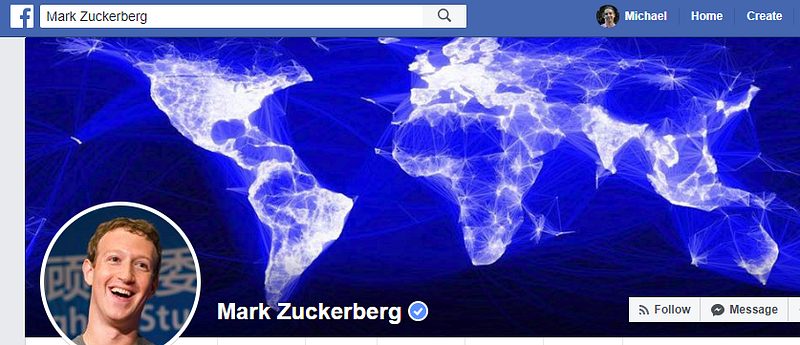
‘I believe the future of communication will increasingly shift to private, encrypted services’
Encrypted services aren’t really private if one company links my mobile phone number with my ID across its network of over 2 billion users. Facebook forces new Instagram users now into connecting to all of these other things, which feels more like an information prison than a town square.
Back in 2004, Mark Zuckerberg wanted all of us to be connected.
Mark said on his blog: “ Privacy gives people the freedom to be themselves and connect more naturally, which is why we build social networks.”
What exactly is “being yourself” when you know you are being monitored by Facebook? I just don’t get it.
Facebook knows the future is messaging not social media, and Mark Zuckerberg’s unified messaging system feels like the coming apartheid of social communications. This as France and the EU are likely to put in place a 3% digital tax on tech giants.
How do you monitor or regulate a company powerful enough to own our encrypted private communications?
The social network’s CEO said in a few years that encrypted messaging would surpass public posts on services like Instagram and Facebook. It’s actually the combination of private messaging and stories that will be the new personal feed. Facebook knew that to combine its most powerful apps like WhatsApp, Instagram and Messenger it could monetize this trend the most efficiently, and I won’t argue with that.
Today we already see that private messaging, ephemeral stories, and small groups are by far the fastest growing areas of online communication. — Mark Zuckerberg (see blog)
Axios and Harris Poll surveyed Americans to see which major brands had the best and worst reputations in the US. Facebook ranks as among the worst in brand reputation in all of America, however ironically users aren’t quitting the apps. This means Facebook will monetize Ads directly in its unified messaging system = the Facebook unity singularity is coming. It’s all based on how to get Ads in front of the most eyeballs, the same vanity metrics gimmick and micro targeting innovation as usual.
Facebook historically has focused on tools for more open sharing not privacy focused tools, but with a unified messaging system Facebook can also try to improve its PR after months of scandals that hit its stock-price. Shareholders and the Street are going to like this move, as it shows Mark Zuckerberg is aggressive in his strategy to dominate the future of messaging and stories.

- Facebook messaging unity will also mean it can scale its services towards matching people in various ways.
- Facebook’s Coin will also enable frictionless transactions on a centralized blockchain for instantaneous payments of a digital coin tethered to the U.S. dollar.
- Facebook Messaging unity will enable Ads that are even more valuable to brands within our most intimate communications as part of our interface-of-everything that will unite Facebook’s trending apps.
The letter is Zuckerberg’s most significant preview of Facebook’s messaging ambitions, in maybe years.
It also shows Facebook’s path forward to evolve into a messaging and story platform for communications, payments, sharing of experiences via short videos and entertainment, including dating and finding events locally.
Facebook Unity is a 6 Pointed Pentagon
In Mark’s blog he unveils how Facebook unity will be founded.
- Private interactions. People should have simple, intimate places where they have clear control over who can communicate with them and confidence that no one else can access what they share.
- Encryption. People’s private communications should be secure. End-to-end encryption prevents anyone — including us — from seeing what people share on our services.
- Reducing Permanence. People should be comfortable being themselves, and should not have to worry about what they share coming back to hurt them later. So we won’t keep messages or stories around for longer than necessary to deliver the service or longer than people want them.
- Safety. People should expect that we will do everything we can to keep them safe on our services within the limits of what’s possible in an encrypted service.
- Interoperability. People should be able to use any of our apps to reach their friends, and they should be able to communicate across networks easily and securely.
- Secure data storage. People should expect that we won’t store sensitive data in countries with weak records on human rights like privacy and freedom of expression in order to protect data from being improperly accessed.
In the middle of the Pentagon is indeed the interoperability function that is the grand test of Facebook’s next era of monetization and app convenience.
Facebook is essentially unveiling a privacy-focused paradigm shift that apparently creates the ultimate tool within its surveillance architecture system, but hey at least it’s encrypted from outside bad actors right? Sorry for the sarcasm but it’s getting harder to trust anything Facebook does considering its history.
Still Facebook putting privacy at the center of its Unified messaging platform is quite hilarious and an effective ploy to shush fears over its ethics and data harvesting. If I’m being monitored by tech companies for profit, my data is obviously not private. My Google Home doesn’t care about my privacy, and with Facebook I’m always trading my data and my right to privacy away for free.


